

Welcome to all the new readers who found us last week on Hacker News! Not-Ship is here to make sense of the world with data. It's messy and uncertain, but we're doing our best.
💙 Amanda
The UK just passed a simple, unprecedented law: Starting next year, no one born after 2008 will be able to buy tobacco. Ever.
Here's how it works: In 2027, it will become illegal to sell tobacco to today's 18-year-olds — anyone born after January 1, 2009. Each following year, the minimum legal age will increase by one. So in 2059, when those same people turn 50, the legal age will be 51. Eventually, it won't be legal to sell tobacco to anyone.
It's only the second country ever to ban a generation from smoking — the first was the Maldives (pop. 500,000) just six months ago — which means there's no evidence yet that it will work.
And yet, the bill passed with significant cross-party support. That's because the case against tobacco is overwhelming, the public is on board and the only people who object are tobacco companies and a few libertarians. There's no good reason not to introduce a ban.
Smoking kills so many people. Even in decline, smoking remains one of the leading causes of preventable death and disease around the world. In 2023, there were 879,000 deaths attributable to smoking in Europe and 333,000 in the US. In just those two regions, that's over a million deaths in a single year.
Smoking contributes to nearly 10% of deaths worldwide
Share of global deaths by risk factor, 2023
Kids are particularly vulnerable: An analysis of smoking rates worldwide found that 83% of smokers started between ages 14 and 25, and 19% began smoking regularly by age 15.
It's expensive for all of us. The UK government estimates the law will save £30.4 billion over 30 years.
Everyone is on board: The legislation wasn't even politically risky. In fact, the whole thing was entirely non-controversial. When Brits were polled in 2025, support for the bill was strong.
Should the UK become a smoke-free country?
How strongly, if at all, do you support or oppose the goal to make Britain a country where no one smokes?
Changing the purchase age works: Two decades ago, the UK increased the tobacco purchase age from 16 to 18, which reduced smoking among 16 and 17 year-olds by 30%.
Now, with a major country leading the way with a full generational ban, other nations may follow. Global smoking trends are already heading in the right direction. Of 167 countries, only 20 saw an increase in smoking rates since 2005.
In the last two decades, smoking has dropped in nearly 90% of countries
Percentage change in smoking rates between 2005 and 2025.
I'll be honest here, I don't know why those 20 countries are bucking the trend. Part of the answer: Aggressive tobacco companies moving into new markets as wealthier ones shrink. But I don't know the full picture. (A post for another time maybe!)
What I do know is that a 2024 review of global health policies found 18% of countries are 'endgame ready' — meaning they have advanced tobacco policies and a low rate of smokers — and another third are almost there. (Endgame is the endearingly dramatic term academics use for entirely ending tobacco use.)
Seventy-six countries are ready, or almost ready, for TOBACCO ENDGAME™️
Readiness for ending tobacco use, based on national policies and smoking rates.
'Endgame ready' means a country has both a low smoking rate (below 15%) and strong tobacco control policies. Surprisingly, most of the 28 countries in that category aren't wealthy nations — they're lower-income countries in Africa, Latin America, and South Asia. Brazil is a standout; it was the first to implement every WHO-recommended tobacco control measure.
For many of those countries, passing a generational ban seems like a no-brainer. Not every nation will have as much public support or as many politicians willing to turn their back on the tobacco industry. But the logic makes sense. The ban saves lives and money. And in the UK, the only significant public opposition came from a far-right figure comparing the law to a heavy-handed Oliver Cromwell.
And yet, the bill passed: No fuss. No heads rolled.
YOUR THOUGHTS: MOOP MAP
Last week I wrote about Burning Man's MOOP Map. And it went a bit viral. For the nitty gritty on clean-up logistics, mechanical litter pickers, and the meaning of anarchy, you'll enjoy the Hacker News comments on the piece.
One of my favourites was a comment from stonegray, a MOOP participant whose description of the process made me feel like I was there:
"On the technical side, we not only log but photograph everything, down to each clump of toilet paper. We check our progress by doing hundreds of tests identical to what the BLM does, both ahead and behind our main crew; bagging up any debris to be photographed on green screens where the pixels are counted to ensure we’re under the 2.29×10^-3 percent limit. It’s a stupendous amount of walking, with no shade, a MOOP stick and a bucket. But it’s a hell of a feeling to be part of making sure we remain undefeated against an impossible task that the future of burning man depends on."
FROM ELSEWHERE
Here's what I found interesting, important or delightful this week:
You left for 8 seconds. An atmospheric tool that shows you what information a website knows about you the second you land on it.
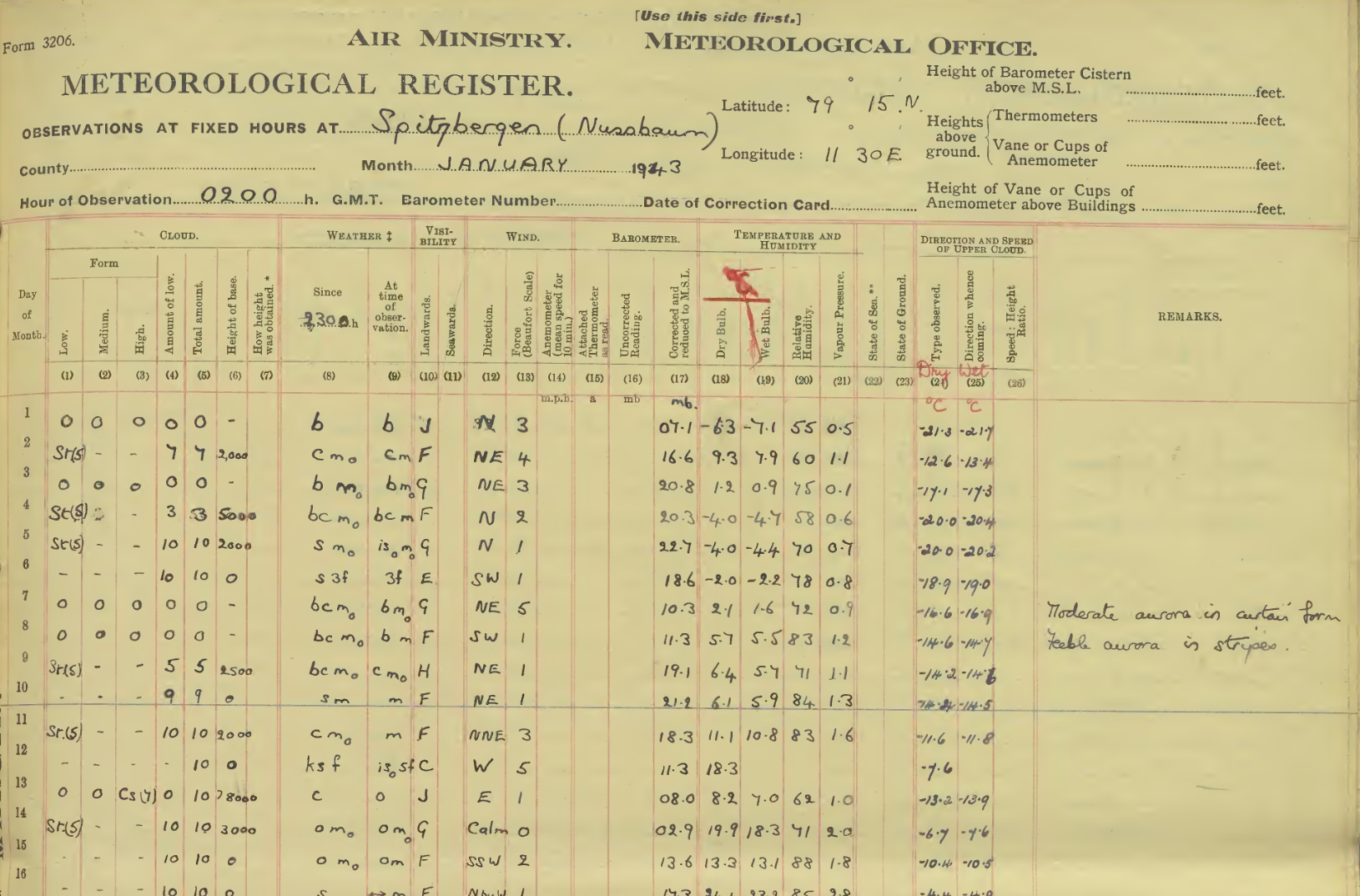
Cancel my Friday plans. The UK Met Office has made international climate observations, taken by the British as far back as 1837, openly available. We're talking image after image of careful handwriting in weathered logbooks.
Data with a mascot. The Federal Data Field Guide is a cute introduction to the US government data ecosystem. It's written in part by Denice W. Ross, who has a very impressive resume — it includes former U.S. Chief Data Scientist — and is worth following on LinkedIn.
MORE NOT-SHIP
 Amanda Shendruk
 Amanda Shendruk
 Amanda Shendruk
Member discussion