
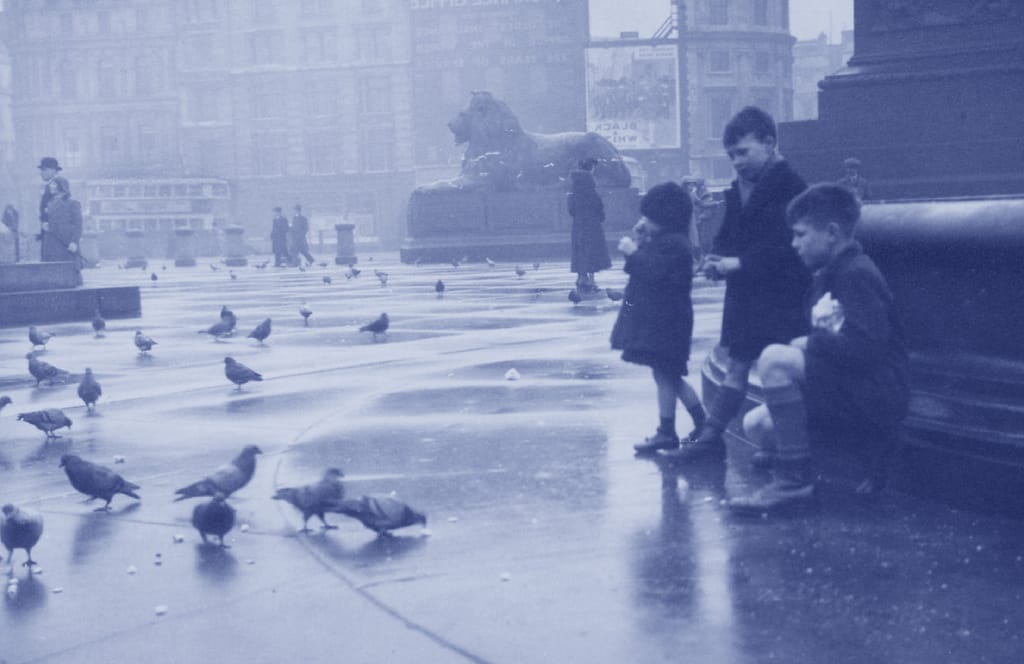
As the year is wrapping up, I'm starting on plans for Not-Ship 2026. You'll be getting more of what you already love, with some experimentation along the way. But I also want to hear from you: Is there a dataset you think we'd all enjoy? Or a conundrum of modernity you want me to tackle? Respond to this email and let me know!
💙 Amanda
When was the last time you lingered? You know, just hanging about. No purpose. No urgency. No real desire to leave.
Yeah. Me neither.
Apparently, we're on trend. Out on the street: Walking speed is up, group gatherings are down, and we've lost the art of lingering. That's what researchers from Yale, MIT, and NBER discovered this year by comparing pedestrian behaviour between 1980 and 2010.
Their study built on the work of William H. Whyte, a prolific people-watcher from the 1970s. Whyte spent years on the streets of American cities, studying urban life. Armed with cameras, notebooks, and students, he documented how people moved through and inhabited public spaces.
These efforts became both a book and a film: The Social Life of Small Urban Spaces. Filled with detailed observations of the things that go unnoticed, these 1980 gems are delightful, funny and genuinely interesting. (But seriously: Go watch the video.)
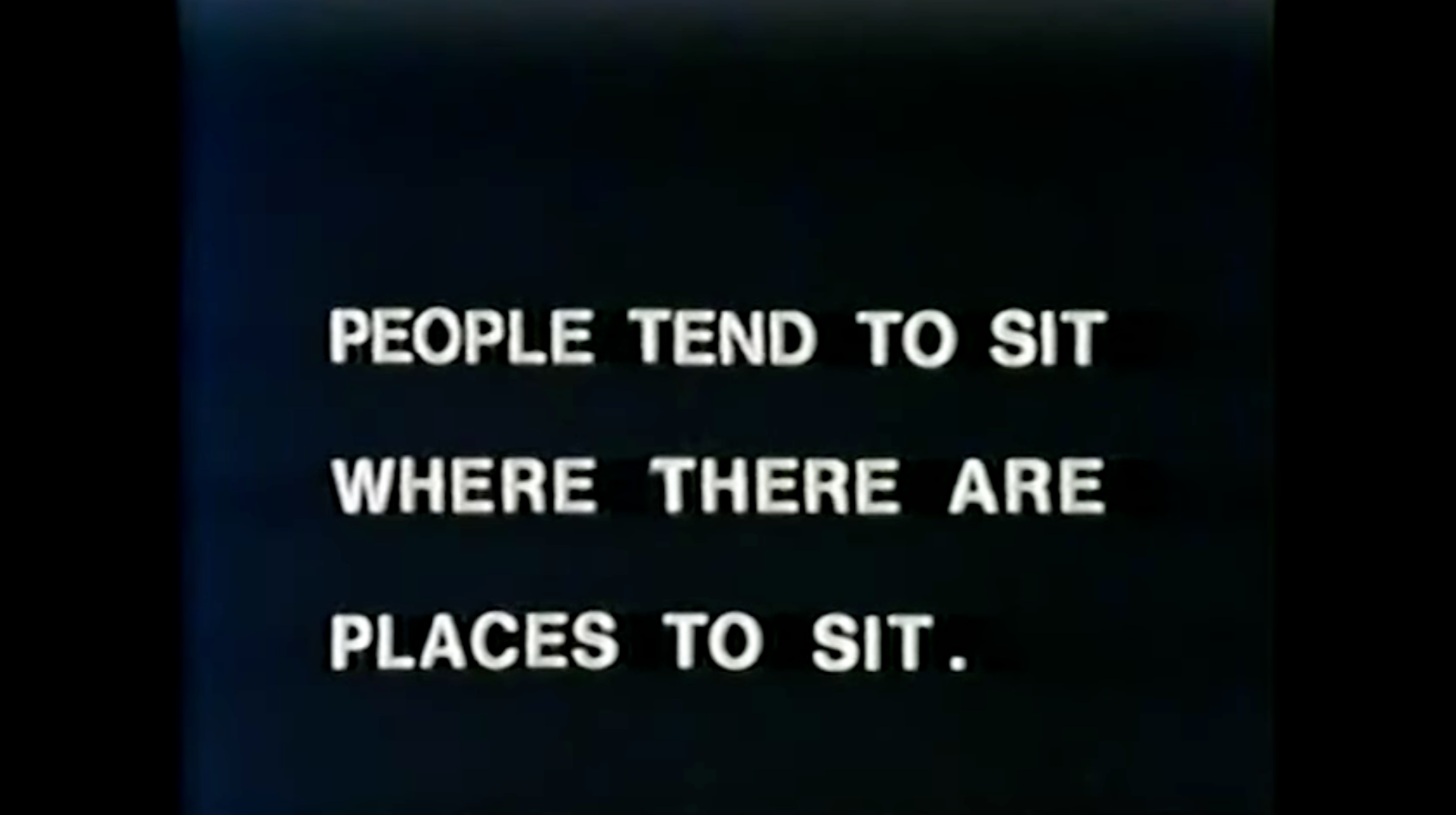
Whyte was a fan of urban data visualization. He charted where people gathered in public squares, the amount of open space, and the male-to-female ratio of pedestrians. He used his data to make recommendations: seats should be "two backsides deep".
He cared a lot about sitting. To Whyte, attractive public spaces were simple: "The sun is important. So are trees and water and food and, most of all, seats."
Here, he's graphed the distribution of sitters in New York's Seagram Plaza.
I love this chart. And I think Whyte might have, too. He likened it to music: "Since the Seagram's chart looked so like a player-piano roll, I wondered what the sound would be if all the dots and dashes could be played," he wrote. "I hope one day it will be [orchestrated]: A Day in the Life of the North Front Ledge at Seagram's, Adagio."
Back to the researchers: They wanted to see how pedestrian behaviour had changed since Whyte's time. They started with digital versions of his 1979-80 Super 8 films. For the modern comparison, they used footage from academic Keith Hampton, who had returned to Whyte's locations between 2008 and 2010, filming at the same times of day.
They chose four spots to study.
Using AI, the researchers then tracked pedestrian behaviour in both the modern and archival footage. Because the study only looked at four locations, all within the US, the researchers admit that the findings may not apply broadly. But they found some notable differences.
Walking speed jumped 15% since the '80s. People also became less likely to gather in groups—whether by arrangement or chance. Group formations dropped from 5.5% in 1980 to 2% by 2010. But the share of people walking alone? That stayed the same.
What I find most interesting is the data on lingering: Across all the sites, the portion of people just hanging about dropped significantly. Lingering even declined at the Metropolitan Museum, one of the most popular tourist spots in New York.
The percent of people lingering fell in every location studied
The researchers suggest a few reasons for these changes: phones may distract from our surroundings and limit face-to-face interactions, a modern 'time is money' mentality could motivate a brisker stride, and perhaps we now prefer coffee shops to public plazas.
Whatever the reason, it seems we've lost something. These little public experiences — lingering, gathering, bumping into people — are good for a city. They help fight loneliness, encourage tolerance and enable unexpected moments of joy.
But when public spaces are simply thoroughfares, they no longer become places of connection. As Whyte himself observed: "What attracts people most, it would appear, is other people."
STAY A WHILE
Want to linger just a little longer? Ok. Let me tell you about my favourite thing Whyte observed. He wanted to know where people liked to have street conversations. What he found confirms something that constantly drives me crazy.
"People didn't move out of the main pedestrian flow. They stayed in it or moved into it, and the great bulk of the conversations were smack in the center of the flow... Just why people behave like this, we have never been able to determine."
NO DESIRE TO GO
This is starting to feel like loitering. But I'm glad you're reluctant to leave! Here's something else to check out — for $9 a month you can help me grow Not-Ship. With enough paid subscribers, extra content could be on the horizon.
FROM ELSEWHERE
Here's what I found interesting, important or delightful this week:
20 years ago, Forbes sent emails to the future. This is the surprisingly touching story of an email time capsule. It came to me via the Weekly Filet, a newsletter that never fails to offer up something good.
People behave better when Batman is around. It's science.
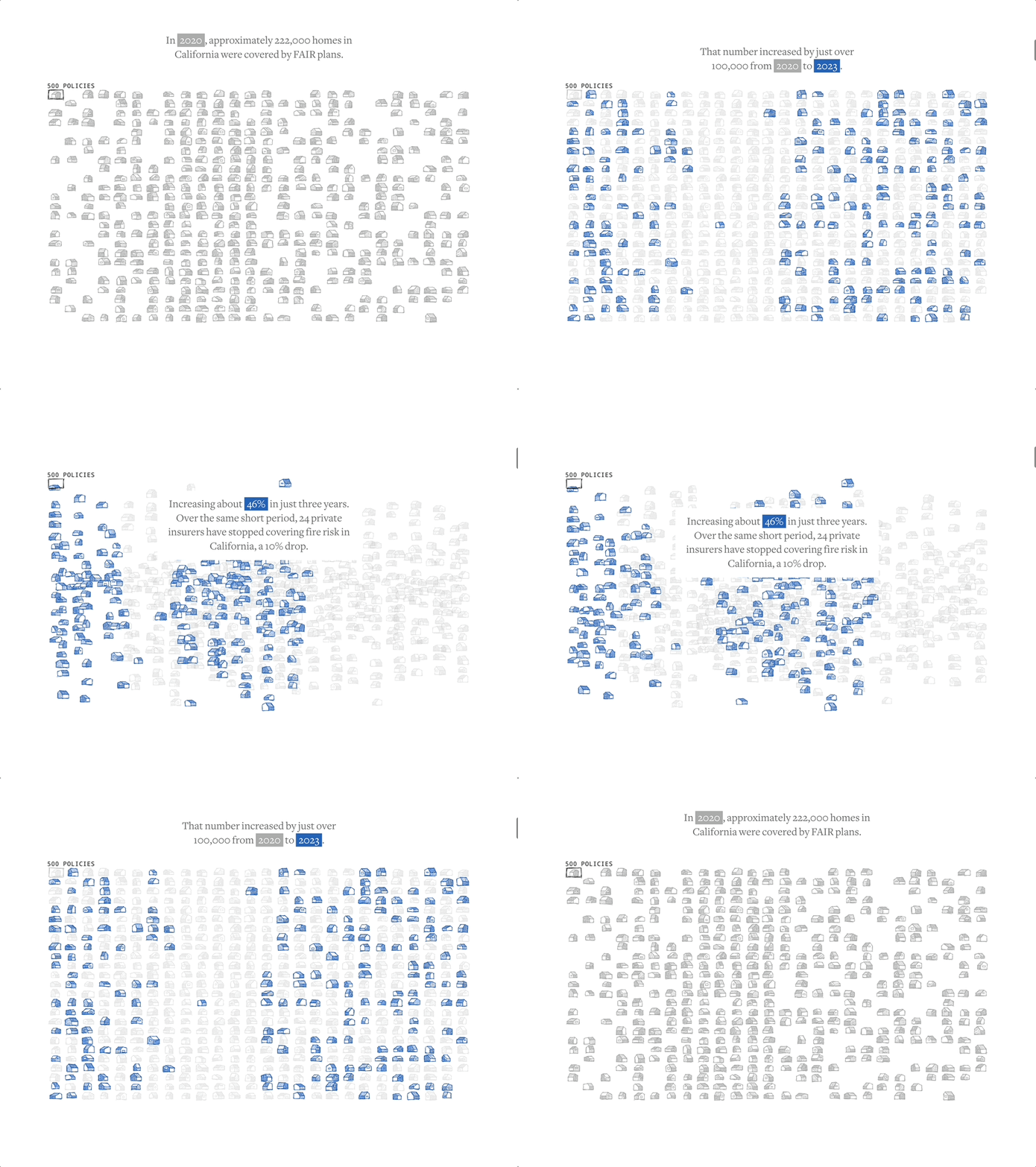
In the US, an insurance stopgap is becoming the norm. This Reuters piece about climate change and 'insurers of last resort' is compelling and sobering. Also, I'm a sucker for tiny icons.
MORE NOT-SHIP
 Amanda Shendruk
 Amanda Shendruk
 Amanda Shendruk
Member discussion