
Happy Thursday. I'm excited to share this week's dispatch with you. It explores something that really irks me, includes some clever academic work, and features an unsettling series of tomato pictures. It's everything we love!
💙 Amanda
I like Star Wars, but I don't want to see the new Mandalorian movie. The Devil Wears Prada was fine the first time around, but I don't need another one. Drake is topping the Billboard Hot 100 again? I'll pass.
I'm tired of the sameness; it's everywhere. When it comes to music and movies, we've been gravitating toward a generic uniformity for decades. (I know this is giving 'back in my day' ... but I have data!)
Take movies. Of the top ten films in this week's international box office, seven are based on franchises or existing IP (that means sequels, prequels, reboots and adaptations): The Super Mario Galaxy Movie, Pegasus 3, The Devil Wears Prada 2, Star Wars: The Mandalorian and Grogu, Scream 7, Michael and Wuthering Heights. And this week isn't much of an exception.
Franchise films have been on the rise
The portion of wide-release movies that are franchise and non-franchise titles, 1997 to 2025.
Last year, 35% of films were franchised. That's about a 60% increase over the portion that were franchised in 1997, according to data from FranchiseRe. In other words, genuinely new blockbusters are becoming increasingly rare.
Now consider the songs on the Billboard Hot 100. Today, hits don't just linger in the top 10, they park there. Since the music chart was created in 1958, the amount of time songs stay in the top slots has increased. It feels like songs all sound the same because, more and more, we are actually just hearing the same song.
Songs remain in the top 10 longer than ever
The average number of weeks a song stayed in the top 10 of the Billboard Hot 100, 1959 to 2025.
Danish researchers found that, overall, most songs spend less time on the Hot 100 chart than in the past; however, songs in the number one spot have tripled their chart lifetime since the 1960s. And today, fewer new artists make it onto the chart; positions are more often occupied by established hit-makers.
And then there are video games. They're even more dominated by franchise titles than movies; however, this has been the norm for decades. In the last ten years, that fraction has never dropped below 90%.
It's common for 100% of top video games to be franchise titles
Percent of games that are franchise titles.
This trend towards sameness — across movies, music and games — is driven by a number of mechanisms. Studios, publishers, and creators choose to make (and remake) what's proven because it's less risky. Known IP is a safe bet; franchise films earn significantly more than non-franchised ones. And audiences keep watching and listening to this stuff. Maybe it's because we actually like it. Or maybe it's because it's easy: Algorithms, optimized for engagement and returns, funnel us towards it. It all adds up to a cultural gravity pulling things towards the generic.
And you know what's not going to save the day? Artificial Intelligence. Because this drift towards the familiar isn't just limited to us.
Researchers recently gave us a fascinating look into the creative ability of the technology. Essentially, they played a game of AI telephone — but with images:
For each experiment, they repeated this cycle 99 times, meaning they got 100 iterations of the initial image. They ran the whole process 700 times, each starting with a different prompt.
Here's how that looks for the experiment above, the PM poring over his documents:
What they found was striking. Despite starting each experiment with totally different prompts, the images kept converging on the same, stock-image-esque visuals.
"[Visual] diversity collapses entirely," wrote Arend Hintze and his coauthors. "AI feedback loops naturally drift toward common attractors — very generic-looking images, which we call 'visual elevator music'."
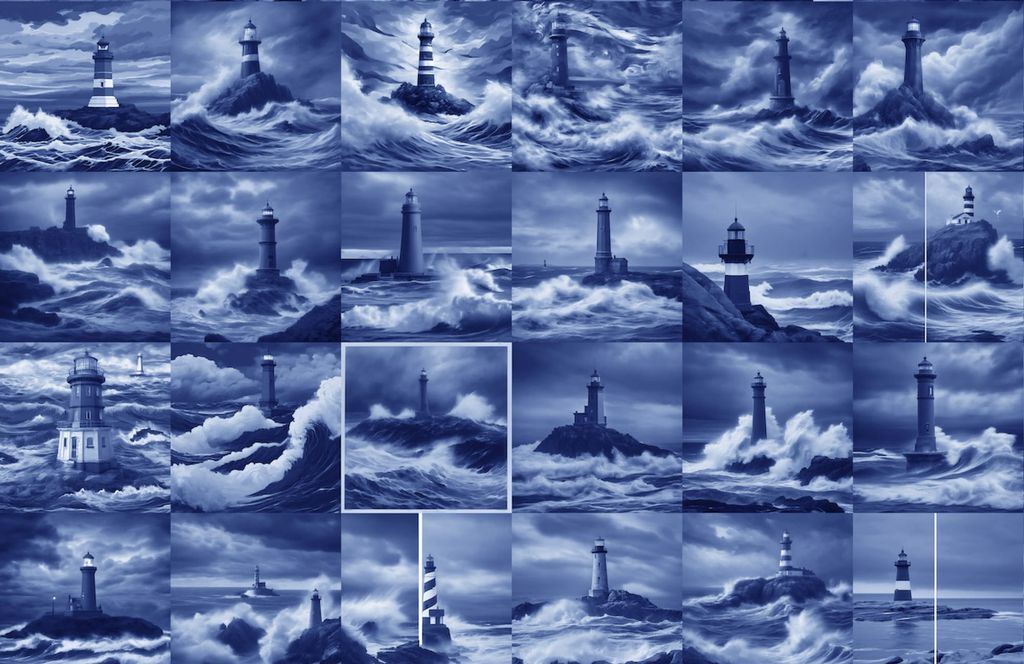
The incredible thing is that, across 700 experiments, images didn't just converge on random generic visuals, they converged on just 12 themes of generic visuals. Notice the fancy red rooms in the example above? That's one of them: Palatial interiors with ornate architecture. Among the other common motifs were stormy lighthouses, pastoral villages, moody urban night scenes and the inside of gothic cathedrals.
Here, a young woman turns into a lighthouse rather quickly:

And to really drive it home, here are just a handful of the many, many prompts that converged on a blue, palatial interior: a voting machine, a rural aid worker, a lone astronaut, a woman with an updo, a pool table, an on-duty officer, and an ancient book.

"These findings are sobering for computational creativity," noted the authors. "If AI systems consistently collapse toward generic outputs when operating without human intervention, this questions whether current approaches can achieve genuine machine creativity."
A few days ago I was frustrated by a lack of original film options, and now I'm elbows-deep in AI-generated stock photos of lighthouses. A consistent pull towards familiarity, towards safe sameness, seems to be operating everywhere. And, if you think about it, of course AI has the same tendency. These systems are trained on what already exists and are optimized to take the statistically well-trod path. I'll be honest: I have no idea what this all means for the future of originality. But I will certainly be adding "visual elevator music" to my vocabulary.
I'd love to hear what you think. Can we stop our drift toward the generic? Is familiarity even so bad? And when was the last time you saw or heard something that felt truly unique?
I'll share your thoughts next week!
THE TOMATOES ARE FINE
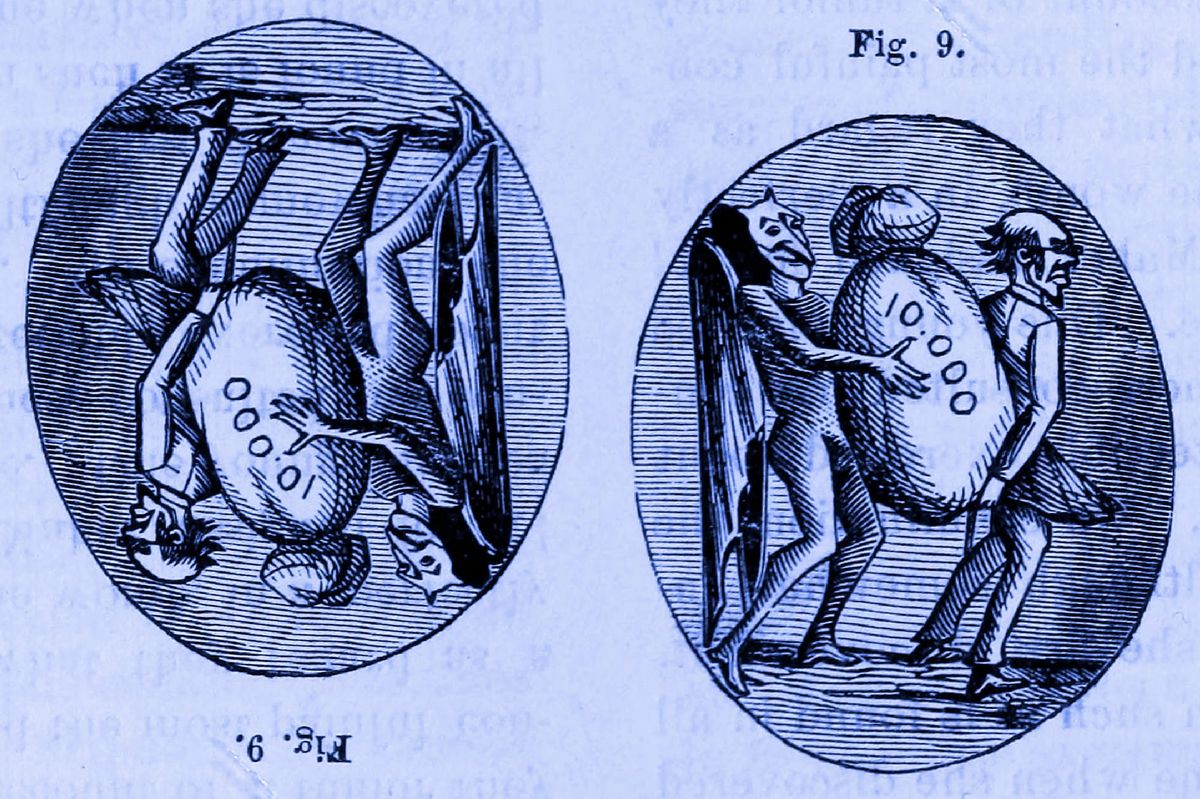
I looked through loads of images from the looping AI experiments. One of the few initial prompts that stayed remarkably consistent from beginning to end? Tomatoes. Please enjoy this intrusive image of iterative pomodoros.

DEFYING THE PATTERN
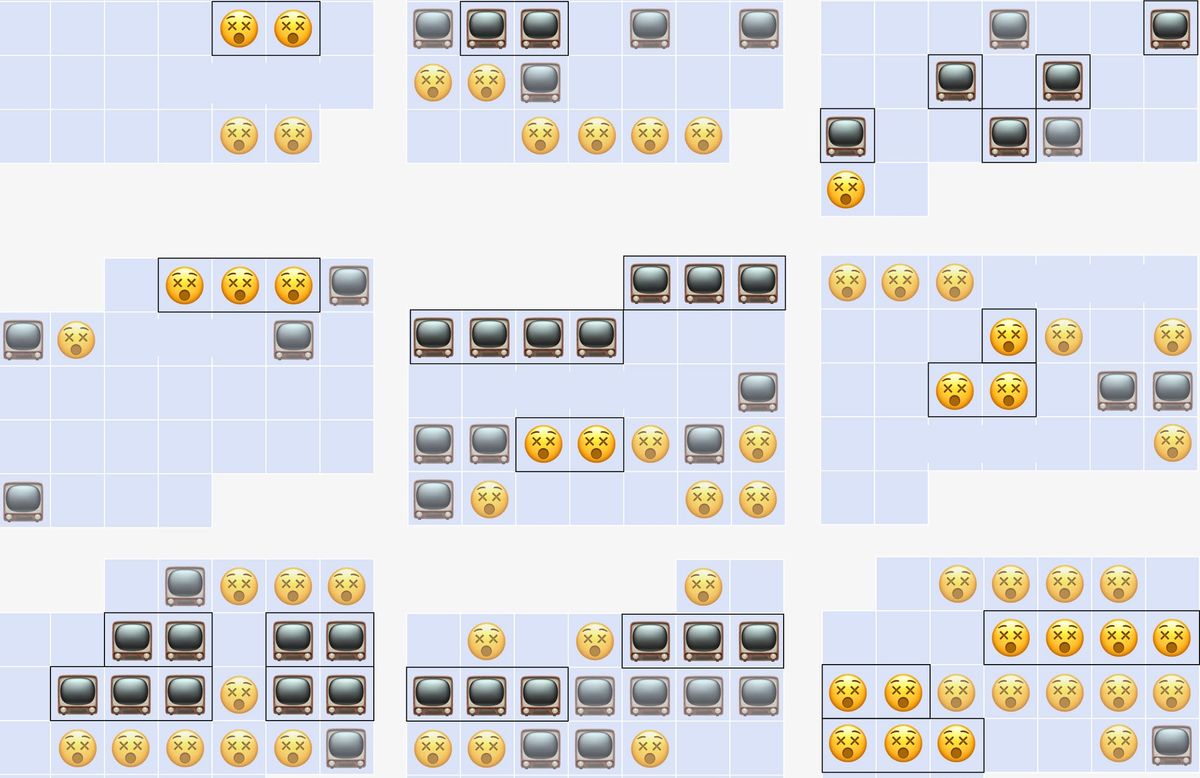
You know what is genuinely new? Something you haven't seen elsewhere? Yeah, it's Not-Ship. Keep this delightful, data-inspired quirkiness coming each week with just $9/month, or $90/year.
FROM ELSEWHERE
Here's what I found interesting, important or delightful this week:
Maximize enterprise ROI. I love when research confirms what we all feel deep in our souls. A Cornell study found that people who love corporate BS are often the least-equipped to make effective, practical business decisions. We'll action this going forward.
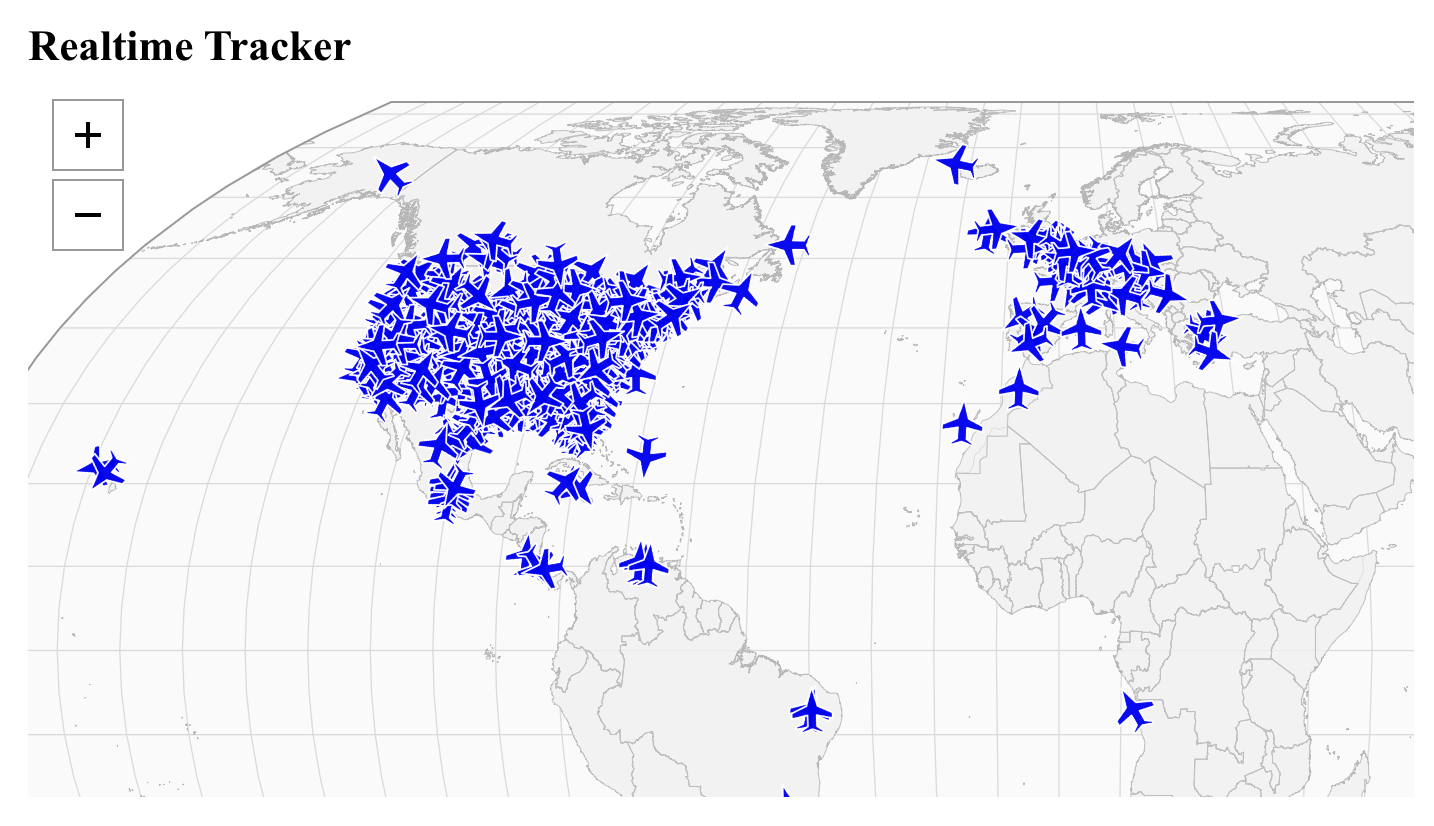
End-times index. The Apocalypse Early Warning System is based on a simple premise: In the event of an imminent nuclear apocalypse, the world's wealthy will take to the sky. So, somewhat tongue-in-cheek, Kyle McDonald started tracking the portion of private jets that are airborne in real time.
Salve mundi. The Pope's 42,000-word treatise on AI and humanity is worth the read. Skip the think pieces and start with the original: It's thoughtful, lays out the ills of the technology clearly, and holds up even when you strip away the scripture. (Jump to chapter three if you want to avoid the Papal history. But to be honest, even that was interesting.)
MORE NOT-SHIP
 Amanda Shendruk
 Amanda Shendruk
 Amanda Shendruk
Member discussion