
Not-Ship just hit its four-month mark: Still standing, still charting the chaos! My goal is to eventually do this full-time — to focus on this community and evolve the ways we use data to make sense of our messy world. But enthusiasm alone won't get me there. I need paid subscribers! If you think Not-Ship is a mission worth backing, now's your moment.
💙 Amanda
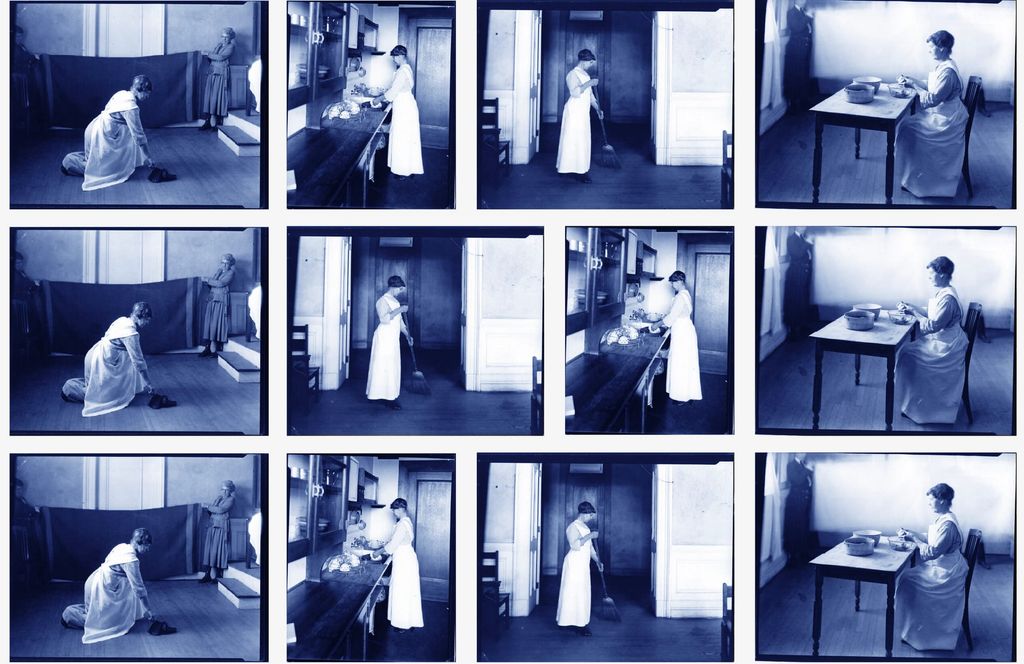
Think about the tasks that keep a household afloat: Making dinner, cleaning the toilet, organizing dentist appointments, chasing the kids, making sure the fridge has chocolate milk. This work is unrecognized, unpaid — and largely unshared.
We stopped calling it "women's work," but we never stopped making it women's work. Today, women across the world spend 17% of their time on these thankless tasks. Men? About 7%.
At Not-Ship we don't rely on those kinds of summary statistics. Perhaps if we look at all the countries in the world, we'll see a different picture. (Spoiler: Nope.)
Worldwide, women spend more of their day on unpaid domestic work than men
Percentage of each day that men and women spend on unpaid labour, 2023 estimates.
The chart shows something astounding: Of all the countries, Bolivia has the highest share of male unpaid labour — yet women in 93% of nations still do more than Bolivian men. UN Women, the organization that published this data, caution that comparing figures across countries is imperfect, since not all nations use the same survey methods.
But OECD data, which is a bit more directly comparable, tells the same story: Danish men do the most unpaid labour of any men in the group — and yet they still do less than women in every single OECD nation. In other words, the most helpful men in the world still do less than the vast majority of women.
That's countries compared against each other. But zoom into any individual nation and the picture is just as stark.
In every country in the world, women spend significantly more time on domestic tasks than men. Every one. Without exception.
And in many countries, that difference is extreme.
As a percentage difference, Cambodia and Egypt are among the countries with the worst gender gap for unpaid work
Percentage of each day that men and women spend on unpaid labour, 2023 estimates.
Of 188 countries, Cambodia has the greatest gender gap in unpaid labour. Pakistan and Egypt are close behind.
In 138 of those countries — that's nearly three quarters — women do at least twice as much unpaid work as men. The remaining 50 nations fare better, but not by much: In all of them, women still do between 20% and 100% more than men. Yeesh. That bar is low.
The US, Germany and Canada are among the countries with the smallest gender gap in unpaid labour
Percentage of each day that men and women spend on unpaid labour, 2023 estimates.
Despite being unpaid, this domestic work has real value. If you tried to put a dollar figure on the free labour happening inside households, estimates range from 15% of GDP in Canada to 26% in Italy — and that's by the more conservative measure. By other estimates, it's as high as 69% of GDP in Germany.
These data are part of a larger story about gender and work. We women still participate in the labour market less than men. When we have children, our employment tends to go down — while our male partners' tends to go up. We are more likely to be in temporary work. And while the gender wage gap has narrowed over time, we still earn less.
Some researchers say that progress towards gender equality has stalled since the 1990s. Others think we continue to make slow headway. Whatever the case, our work isn't done.
FIND YOURSELF
Here's a version of the chart just for you. I've highlighted the countries where most Not-Ship readers are based, so you can find yourself in the data.
Percentage of each day that men and women spend on unpaid labour, 2023 estimates.
FROM ELSEWHERE
Here's what I found interesting, important or delightful this week:
Links for reflection, not reaction. A couple of weeks ago, Dense Discovery wrote about my piece on American exceptionalism. Ever since, I've been hooked. The newsletter is nicely designed and thoughtful, offering "curated links from a noisy web."
Practising what I preach. Last week, I bought a subscription to one of my favourite podcasts: The Rest is History. It's one of the most popular podcasts for a reason: Great historical storytelling, week after week. I'm currently working my way through their multi-part series on Joan of Arc. (I think she's gonna make it!)
MORE NOT-SHIP
 Amanda Shendruk
 Amanda Shendruk
 Amanda Shendruk
Member discussion